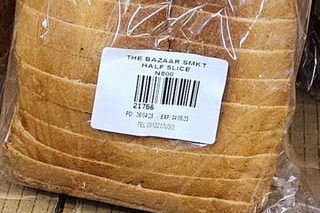
Traditionally, bread has been one of the cheapest and most filling foods for Nigerians, especially for low-income families. Its rising cost and reduced availability are clear indicators of the country’s worsening economic situation. Many people who used to rely on bread as a daily meal can no longer afford it, leading to hunger. Recently, supermarkets and bakeries across Nigeria have started selling half loaves of bread, a move that was once unimaginable for many Nigerians. According to reports, the average price of sliced bread has surged by over 100% year-on-year, with premium loaves now costing as much as ₦2,500 and standard loaves around ₦1,500. As a result, half loaves are now being sold for about ₦800, making bread; once the most accessible food for the poor an increasingly rare luxury.
It is also important to reiterate that the bread crisis is just one symptom of Nigeria’s broader inflation problem. The cost of flour, the key ingredient in bread has skyrocketed, with prices jumping from ₦16,000 to ₦43,000 per bag in recent years. Other inputs like sugar, fuel, and gas have also become more expensive, driving up the cost of production for bakeries. These rising costs are passed on to consumers, altogether making bread and other staples unaffordable for a growing number of Nigerians.
If this Inflation continues, The United Nations projects that by August 2025, 33 million Nigerians will be facing food insecurity, an increase of 7 million from the previous year. As millions of Nigerians continue to face hunger and malnutrition, the shrinking loaf of bread might just be a start; a reminder of the challenges ahead. Therefore, addressing inflation is a must!
Source: 9janews.ng dailypost.ng nairametrics.com
 The Naija Lowdown Writer