
Creatures Found Nowhere Else on Earth
Nigeria’s landscapes; from lush rainforests to rocky plateaus, harbor wildlife found nowhere else on the planet. Unfortunately, these endemic species, adapted to their unique ecological niches, face mounting threats from habitat loss and human activity. Let’s explore 7 remarkable animals that call Nigeria their only home, weaving through their stories with insights from recent research and conservation efforts.
1. The Niger Delta Red Colobus
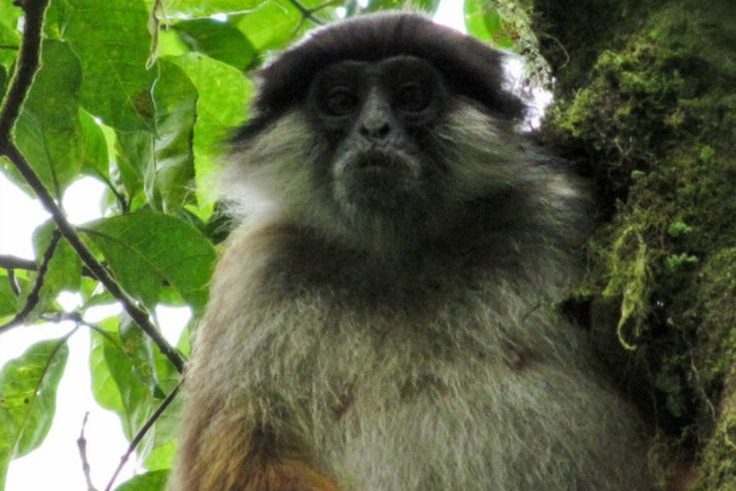
Deep in the mangrove swamps of the Niger Delta lives the Niger Delta red colobus (Piliocolobus epieni), a critically endangered primate with striking reddish fur and a social structure as complex as its habitat. First identified in 1993 and found only in the marshy forests of the Niger Delta in Nigeria, they’re believed to live in small family groups with females spending a significant amount of time grooming each other. They thrived by relying on the delta’s dense forests for food and shelter, feeding primarily on leaves and unripe fruits. However, the species now faces significant threats from habitat loss and fragmentation, deforestation and degradation due to logging, oil extraction, and hunting, leaving isolated populations vulnerable to extinction. At the moment, they have been listed on the IUCN Red List as Critically Endangered and conservationists emphasize that protecting these primates requires immediate action to curb illegal logging and expand protected areas.
2. Sclater’s Monkey
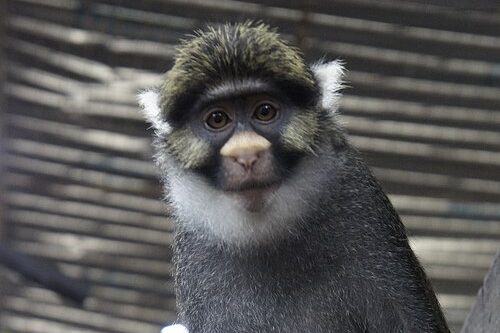
Sclater’s monkey, a species of guenon (Cercopithecus sclateri), can be found in the shrinking rainforests of southern Nigeria. Distinguishing features include its blue-tinged face and white throat patch. These monkeys were previously thought to be near extinction but are now known to exist in several isolated populations. Sclater’s monkeys are primarily found in the Guinean Forests of West Africa biodiversity hotspot, specifically between the Niger and Cross Rivers in southern Nigeria. Also, they are likely primarily frugivores, meaning they eat fruits, and may supplement their diet with other plant parts and insects. Farmers clearing land for agriculture have inadvertently pushed these monkeys closer to human settlements, increasing conflicts.
3. Ibadan Malimbe
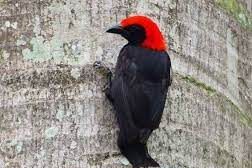
The Ibadan malimbe (Malimbus ibadanensis), an insectivorous bird, feeding on insects, insect larvae, fruits, and seeds, is a vibrantly colored bird with a crimson head and black body, endemic to southwestern Nigeria, particularly around Ibadan. Discovered in 1951, this species is now listed as Endangered due to habitat loss from deforestation for cocoa plantations and urban expansion, with its present population estimated at around 2,500 individuals. The Ibadan malimbe is a member of the weaver bird family (Ploceidae), It is also one of only four endemic bird species in Nigeria, and the only one dependent on forest habitat. Additionally, The Ibadan Malimbe is a solitary nester, meaning they build their nests independently and do not nest communally. Ornithologists recognize the Ibadan malimbe’s unique nesting behavior as a crucial adaptation for survival. This bird constructs elaborate hanging nests, often resembling inverted socks, from palm fronds and tendrils of climbing plants. These nests, built high in mature forest trees, are a key factor in the malimbe’s success in a habitat that faces threats like habitat loss and competition. During mating season which usually falls around May/June, and at times, other months, the female incubates the eggs (typically 1-2) and both parents feed the nestlings. By nesting season, The Ibadan Malimbe may experience nesting competition from other species, such as Red-headed Malimbe and Fork-tailed Drongo, which also nest in mature forest trees, further adding to their decline. Yet, with fewer than 2,500 individuals remaining, the race is on to preserve its habitat before it’s too late.
4. Jos Plateau Indigobird
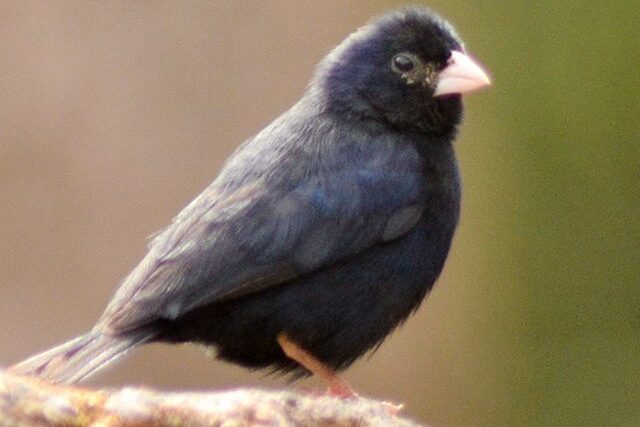
Found only in Nigeria, the Jos Plateau indigobird (Vidua maryae) is a brood parasite that lays its eggs in the nests of rock firefinches, a survival tactic that involves egg and song mimicry to ensure its young are raised by foster parents – Meaning it relies on other birds to raise its young. It doesn’t build its own nests or care for its eggs. This parasitic behavior is a key characteristic of the Vidua indigobirds, a group of closely related species that have evolved to mimic specific estrildid finch hosts. The Jos Plateau indigobird’s vocalizations, including mimicry of the Rock Firefinch’s songs, play a crucial role in its territorial defense, courtship, and successful parasitism. The Jos Plateau indigobird and its host species are found in rocky areas within the Guinean savanna of northern Nigeria. Specifically, it is restricted to the Jos Plateau region and its surrounding areas in northern Nigeria.
5. Ondo Forest Gecko
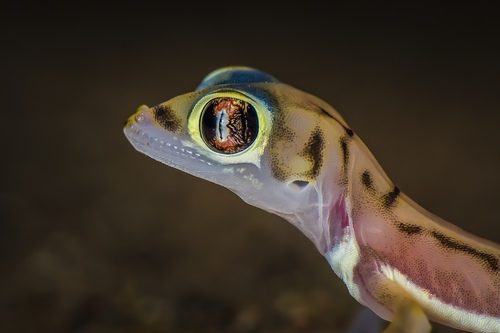
Hidden in the rainforests of Ondo State, the Ondo Forest gecko (Ancylodactylus petrodroma) clings to tree trunks with specialized toe pads. This nocturnal reptile is a poorly known lizard species endemic to Nigeria in the Ondo forest and Rocky areas of Idanre hills. It seems to be an elusive creature which gives researchers little knowledge about it. However, Despite has already faced habitat loss from logging and agriculture. Herpetologists stress the need for further studies to understand this reptile role in controlling insect populations, as its secretive nature makes population estimates challenging.
6. Ibadan Thread Snake
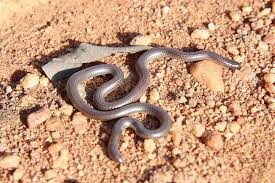
Beneath the soils of Ibadan’s forests, the Ibadan thread snake (Tricheilostoma greenwelli) slithers undetected. Measuring just 10–15 cm, this burrowing species feeds on ant larvae and termites, playing a crucial role in soil health. Like other thread snakes, it is venomous and blind but has a very sharp sense of smell. However, its limited range and cryptic habits make it particularly vulnerable to urbanization. Protecting remaining forest fragments is critical to ensuring this tiny snake’s survival.
7. Perret’s Toad

The Perret’s toad (Sclerophrys perreti) is a critically endangered species endemic to Idanre Hill in southwestern Nigeria, specifically in the Idanre town of Ondo State. It’s a toad known only from a few localities, and found exclusively in the rocky and inaccessible Idanre Hills, making it vulnerable to habitat loss and other threats, despite being considered common where it is found. After being considered “lost” since 1970, Perret’s toad was rediscovered at its type locality in 2013. Ongoing conservation efforts are needed to protect its limited range. Fortunately, research and community-based actions are underway to protect the remaining population and improve knowledge of its habitat suitability and the impact of climate change.
By supporting local conservation initiatives, reducing deforestation, and advocating for sustainable development, we can ensure these unique creatures thrive for generations. Visit Nigeria Conservation Foundation to learn how you can help.
 The Naija Lowdown Writer