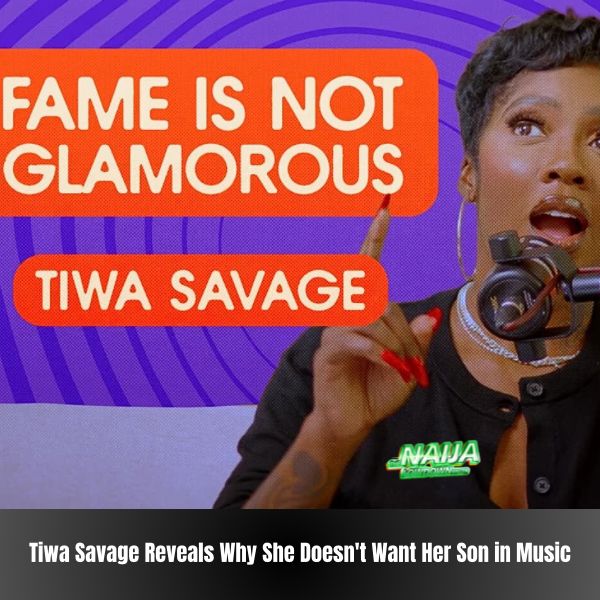
Tiwa Savage’s revelations about her son and the music industry came during a candid conversation on the Afrobeats Intelligence podcast, hosted by Joey Akan and produced by OkayAfrica, recorded and released on June 20, 2025. In that episode, she explained how the demands of music, especially during the COVID‐19 lockdown when her home studio blurred work and family life, stripped away precious time with her son, Jamal . She painted a raw picture of late‑night recording sessions spilling into what should have been bedtime stories, reinforcing her determination to shield him from those pressures.
“During lockdown, I had a studio (at home) and I was actually trying to learn how to record myself,” she said early in the conversation. “And then I realized that I was always there. 2 a.m. in the morning, and sometimes I’m not even recording, I’m just listening to music, watching something. Initially I was not spending time with my son especially, and it wasn’t good for me ‘cause I couldn’t separate work from home ‘cause work was in my home. And I didn’t like that; I wanted to be able to leave work and come home.”
Savage didn’t hold back either when discussing the industry’s grim realities. She warned that the odds of success are slim, careers can peak and fade within just a few years, and the financial and mental toll is often hidden behind the glamour . Reflecting on public misconceptions versus reality, she noted, “I said this one time that I can’t sign an artist and I got a lot of backlash,” she says. “My heart can’t take it. It’s hard. The rate of success is very slim, not only that, if you’re blessed to [have hits], your life span, it might not be, 10 years. It might not even be five years, so it’s even harder to sustain a career and to be lucrative. Mentally, as well, imagine being an artist and you’re not really making as much as people think you are but you have to live like you are”. The relentless need to maintain appearances, stay relevant, and manage expectations comes at a steep personal cost.
After her return from the U.S., Tiwa Savage also touched her challenges with her branding, with some labels wanting to make her the “African Rihanna,” a type of categorization that didn’t really match her vision. Meanwhile, other labels didn’t think her “blending R&B and Afrobeats would work,” she said, “Everyone was like, ‘you’re a great singer, you look amazing.’ It was more like, let’s think about it, but I never got the call back.”
Ultimately, these experiences have shaped her protective stance toward her son’s future. Tiwa confessed that she wouldn’t advise Jamal to follow her path because the industry’s unpredictability, emotional strain, and the sacrifices she’s endured, especially the lost moments of motherhood aren’t worth the potential rewards. In her words, she wishes to spare him the instability and to preserve the purity of their bond. With heartfelt honesty, she concluded that some lessons are best learned outside the studio and that her son’s happiness matters more than any hit song.
 The Naija Lowdown Writer