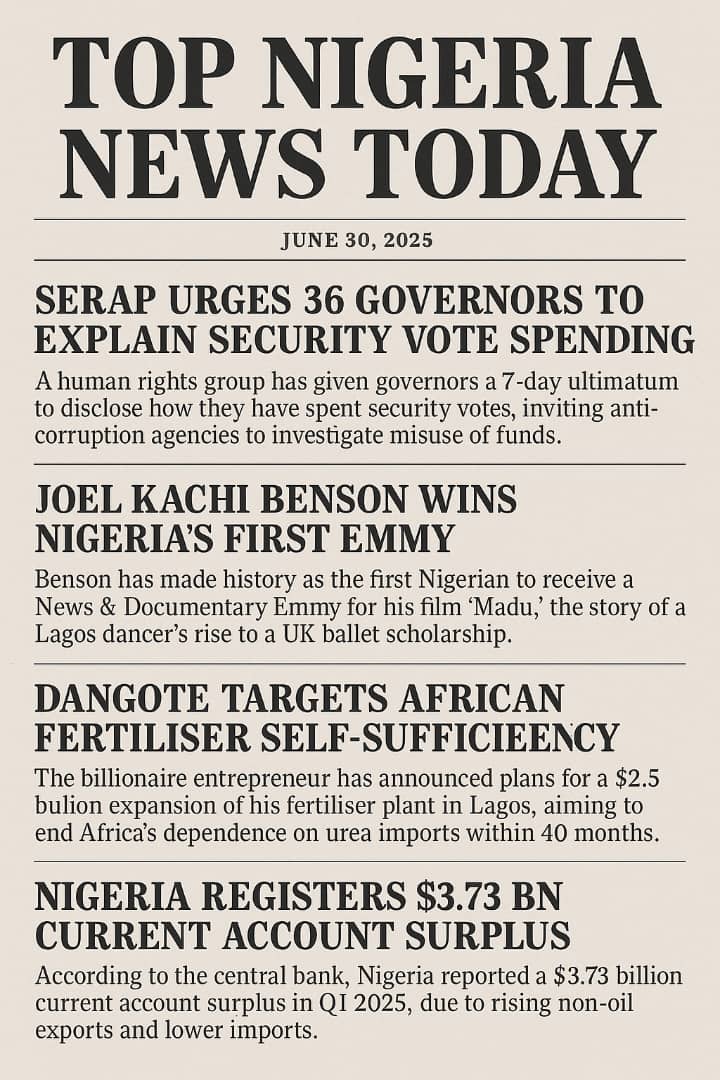
1. SERAP urges 36 governors to explain security vote spending
The Socio-Economic Rights and Accountability Project (SERAP) has formally challenged all 36 state governors in Nigeria to publicly disclose how they have been spending “security votes” funds allocated monthly for internal security since May 29, 2023. Through Freedom of Information requests dated June 28, 2025 and signed by Deputy Director Kolawole Oluwadare, SERAP demanded transparency and invited corruption-fighting agencies like the EFCC and ICPC to independently track the outlays. The group said this is particularly urgent in light of ongoing massacres in places like Benue and growing state-wide insecurity, which make the justification for these expenditures a matter of pressing public concern.
SERAP highlighted that governors have long masked the use of these funds from legislative oversight, allowing potential misappropriation. They noted that security votes run into billions of naira annually, yet citizens continue to suffer from weak protection and rising violence. The organisation warned that this continued opaqueness “fuelled corruption and weakened the ability of citizens to hold their leaders accountable”.
In a stern tone, SERAP issued a seven-day ultimatum, giving governors until early July to comply with the disclosure demand and facilitate investigations by anti-graft bodies. They stressed that such secrecy violates constitutional obligations under Sections 14(2)(b) and 15(5), which require public officeholders to protect citizens’ welfare and stamp out corruption. As insecurity worsens across the nation, this push positions transparency over secret spending as a crucial step toward accountability and improved governance.
2. President Tinubu approves new PPP thresholds
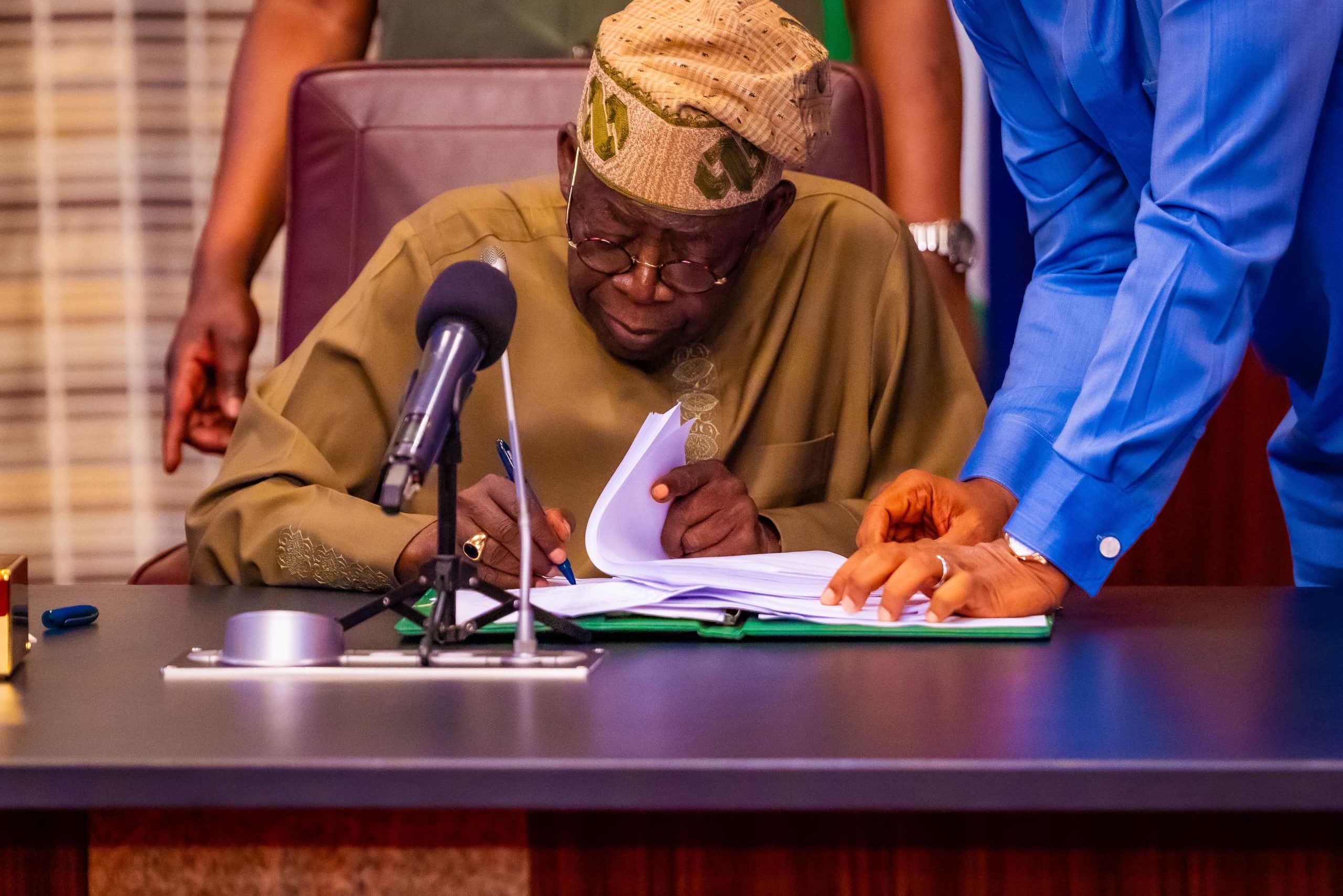
President Tinubu has signed off on new thresholds that significantly streamline the process for public-private partnerships (PPPs) in Nigeria. This policy update enhances the authority of the Infrastructure Concession Regulatory Commission (ICRC), enabling them to fast-track PPP approvals especially for mid-value projects. Reports say this tweak may attract greater private sector investments. The move positions PPPs as a cornerstone of Tinubu’s agenda to spur infrastructure growth and economic development without direct government expenditure.
Experts note that boosting PPP engagement could accelerate investments across sectors such as roads, healthcare, and renewable energy, aligning with broader economic policies aimed at job creation. It also supports Nigeria’s effort to reduce dependency on oil revenue by tapping into private capital for national development. This builds upon earlier fiscal reforms by the administration aimed at improving project delivery efficiency and reducing bureaucratic bottlenecks.
Critics, however, voice cautious optimism, arguing that oversight and accountability mechanisms must be robust to prevent graft and ensure public interest is protected. They advocate for transparent guidelines, stakeholder participation, and frequent audits of projects funded through PPP structures. With these guardrails, the new thresholds could unlock long-stalled projects and usher in a new phase of infrastructure-led growth.
3. Oba of Benin praises Tinubu, urges unity
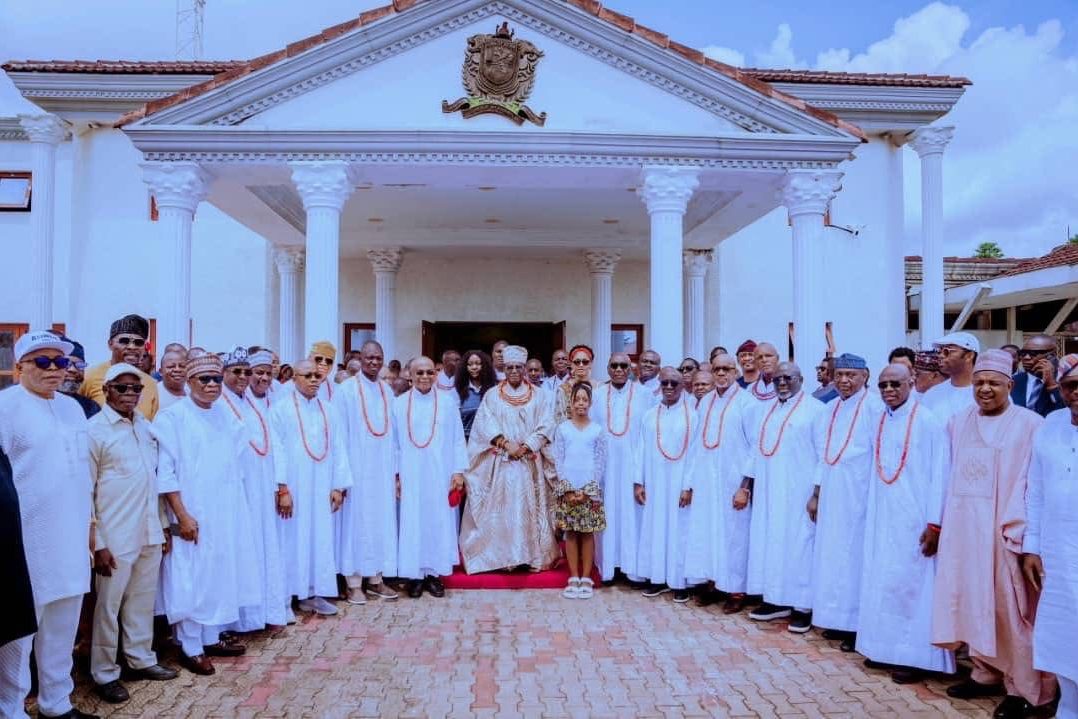
The Oba of Benin, Ewuare II, publicly commended President Tinubu’s leadership and emphasized the need for national unity transcending ethnic and regional lines. In a recent statement, the monarch highlighted Tinubu’s “inclusive vision” and urged state governors to prioritize national cohesion above tribal or partisan interests. The endorsement from such a respected traditional ruler strengthens Tinubu’s outreach to southern Nigeria, where ethnic concerns remain politically sensitive.
During his address, Oba Ewuare II reminded leaders that Nigeria’s strength lies in its diversity, calling on governors and public officeholders to safeguard societal peace and stability. He appealed for collective action against rising economic hardship and insecurity, stressing that unity remains Nigeria’s best defense . His call resonated strongly amid recent internal migrations and intensified flooding, which have exacerbated communal tensions.
Though largely symbolic, the Oba’s remarks carry substantial cultural weight and serve as a reminder of traditional institutions’ role in national cohesion. Observers say if state authorities heed this call, it could reduce fractionalization and help align local actions with federal cohesion efforts. With elections approaching, his message reinforces the importance of unity in ensuring peace and effective governance.
4. Joel Kachi Benson wins Nigeria’s first Emmy

Filmmaker Joel Kachi Benson made history by becoming the first Nigerian to win a News & Documentary Emmy, clinching the Outstanding Arts & Culture Documentary award for his disney-backed film*“Madu”. Co-directed by Oscar nominee Matt Ogens, the Disney documentary tells the inspirational journey of Lagos-born dancer Anthony Madu, who went viral in 2020 after dancing barefoot in the rain. The emotional telling from viral video to a UK ballet scholarship that captivated global audiences.
The Emmy, awarded in New York City by NATAS, also recognized Benson and his team for direction, marking a double triumph. Benson dedicated the honour to Nigeria and children worldwide, especially Anthony, noting this is a validation of authentic African storytelling reaching global stages.
This milestone cements Nigeria’s position in high-quality documentary storytelling and provides a platform for local filmmakers in arts and cultural narratives. It also inspires other creators to pursue impactful content beyond Nollywood, enhancing the country’s creative credentials. As Nigerian stories gain global notice, this Emmy could mark the start of more international accolades.
5. Nigeria registers $3.73 bn current account surplus
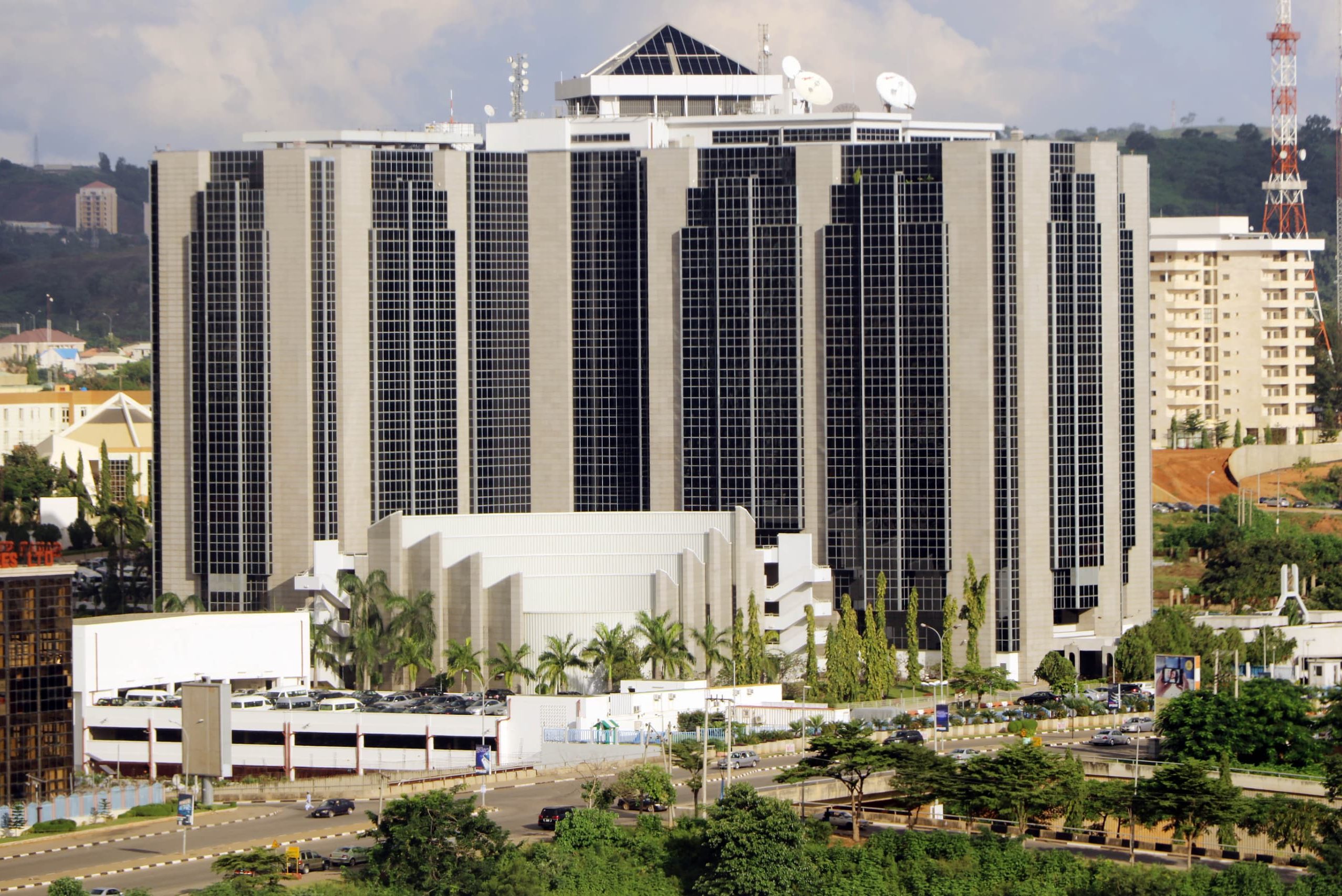
The Central Bank of Nigeria (CBN) reported a $3.73 billion current account surplus in Q1 2025, up from $3.69 billion in Q1 2024, though slightly below the $3.80 billion surplus recorded in Q4 2024. This gain reflects a stronger merchandise trade balance, where total exports rose 9.8% to $13.91 billion driven by oil and gas shipments, and non-oil exports climbed 30% to $2.66 billion. At the same time, total imports particularly non-oil and petroleum imports fell to $9.75 billion, easing pressure on foreign currency reserves,
This balance improvement signals strengthening trade dynamics: non-oil exporters are benefitting from more competitive prices due to naira depreciation, while more local goods are replacing imports. Secondary income also contributed a stable surplus of $5.29 billion, showcasing growing diaspora remittances. These figures reaffirm efforts to diversify Nigeria’s economy beyond oil .
Economists say the surplus supports macroeconomic stability by boosting external confidence and potentially grounding the naira, but they warn sustaining this momentum requires strengthened non-oil production, stable currency policy, and continued import substitution. The data also reinforces CBN’s strategy to normalize the forex market, support exporters, and control inflation. With this balance, Nigeria is better positioned to finance development, ease foreign debt, and build resilient economic foundations.
6. Dangote targets African fertiliser self-sufficiency
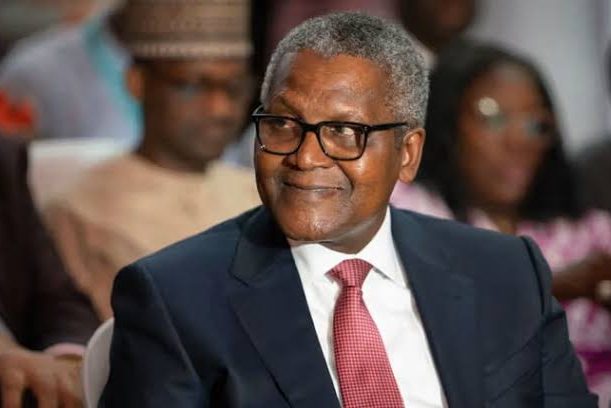
At a June meeting of the African Export-Import Bank in Abuja, Aliko Dangote, Africa’s richest man, announced bold plans to make the continent self-sufficient in fertiliser within 40 months. He outlined a $2.5 billion expansion of his Lagos-area fertiliser plant which is currently producing 3 million tonnes annually to double that capacity, overtaking global producers and ending the need for imports of over 6 million tonnes per year. He passionately stated, “In the next 40 months, Africa will not import fertiliser from anywhere… bigger and higher than Qatar”.
The initiative promises strong economic benefits like reducing foreign exchange depletion, boosting agricultural productivity, and creating jobs to support food security and rural economies. However, analysts caution that achieving this vision faces significant challenges such as logistical constraints like congested ports, insufficient transport networks, and the risk of cost overruns loom large, based on historical delays in Dangote’s earlier projects.
Dangote’s plan also includes publicly listing the fertiliser plant on the Nigerian Stock Exchange this year, following the refinery listing slated for 2026. This could attract capital interest domestically and abroad, positioning the company to lead Africa into a new era of industrial agribusiness. But success hinges on infrastructure upgrades, supportive policy frameworks, and continuous production scaling, without which the continent may still struggle to escape reliance on imported farm inputs.
Subscribe for More Updates!
 The Naija Lowdown Writer