
1. Opposition Leaders Unite Under ADC for 2027 Election

A coalition of major opposition figures including Atiku Abubakar, Peter Obi, Aminu Tambuwal, Nasir El‑Rufai, Rotimi Amaechi, Uche Secondus, and others has officially adopted the African Democratic Congress (ADC) as their platform to jointly challenge President Tinubu in 2027. Former Senate President David Mark was nominated as pro tem national chairman, while former Osun State governor and Minister of Interior, Rauf Aregbesola, was named pro tem national secretary. Bolaji Abdullahi (ex‑Minister of Sports) is the party’s temporary spokesperson.
Key Figures & Attendance
The July 1 meeting in Abuja included ex–Vice President Atiku Abubakar, Peter Obi, Aminu Tambuwal (ex‑House Speaker and Sokoto governor), Nasir El‑Rufai, Rotimi Amaechi, Uche Secondus, Abubakar Malami, Liyel Imoke, Tom Ikimi, Kashim Imam, Sule Lamido, Babangida Aliyu, Sam Egwu, and others from APC, PDP, LP, and SDP heritage.
Why ADC?
Deliberations considered forming a new platform named All Democratic Alliance (ADA), but ADC was chosen because it’s a registered, recognized party with presence across geopolitical zones. Hence, it offered immediate access and avoided INEC delays,
Internal PDP Response
The move was launched by a PDP “Concerned Leaders” bloc, led by Atiku and David Mark, who called on other PDP stalwarts to join the coalition to “rescue Nigeria” from APC rule, citing failures in democracy, economy, national unity, and security under Tinubu.
APC Reaction
The ruling APC, through spokesman Bala Ibrahim, dismissed the coalition as “dead on arrival,” confident Tinubu would win again and implying the group lacked real public support.
Notable Quotations
A pro‑coalition source said, “Several leaders requested time to consult their supporters on the ADC decision. Wednesday’s meeting will be to collate and ratify those views” ahead of formal adoption. Also, Aregbesola, on accepting his pro‑tem appointment, stated it was accepted “with deep humility, a profound sense of duty, and unwavering hope for our people, nation, race and party”.
2. Tinubu Honored by Saint Lucia, Champions Education in Caribbean Visit
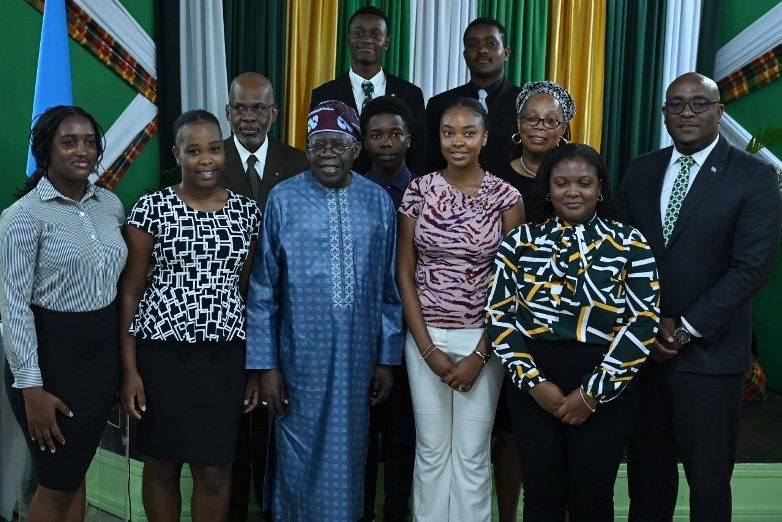
President Bola Tinubu began his state visit to Saint Lucia on June 28, 2025, flying from Abuja alongside senior officials . He was warmly received by Governor‑General Errol Charles and Prime Minister Philip Pierre, complete with military honors . On July 1, Tinubu was conferred with Saint Lucia’s highest award: the Knight Commander of the Order of Saint Lucia (KCOSL). During the formal ceremony at Government House in Morne Fortune, he accepted the knighthood, saying: “I came here as a president, but I’m leaving as a knight.”
He also added that the honor “symbolised a deepening of historic and cultural connections between Nigeria and Saint Lucia”.
How?
Additionally, Tinubu visited Sir Arthur Lewis Community College in Castries, where he emphasized the importance of education and analytical thinking and urged students not to rely solely on AI. Encouraging self-reliance, he advised: “Don’t depend on AI technology to find you the solution. Go through like a recipe in the kitchen, one after the other… Then you solve the problem, and see satisfaction in yourself.”
He also described education as “the most effective weapon against poverty,” urging boldness, consistency, and discipline. During the college visit, a local performance of The Drum Maker showcased Saint Lucian culture. In response, Tinubu extended an invitation for the performing arts group to visit Nigeria for a cultural exchange.
He also added, “I believe Nigeria will collaborate with Saint Lucia to make a difference in the lives of our Black race,” he declared, invoking Nigeria’s national anthem to emphasize handing over “a banner without stain” to future generations.
Diplomacy & Next Steps
The visit included an address to Saint Lucia’s Parliament and a working lunch with OECS leaders to strengthen ties across education, technology, trade, and culture. Tinubu further reiterated Nigeria’s commitment to South–South cooperation under the African Union’s Sixth Region framework, highlighting African diaspora partnerships.
Following Saint Lucia, President Tinubu will travel to Rio de Janeiro, Brazil, to participate in the 17th BRICS Summit, scheduled for July 6–7, 2025. Nigeria has been upgraded to “partner country” within BRICS, which includes full African members South Africa, Egypt, and Ethiopia.
3. NNPCL Reports ₦1.054 Trillion Profit in May 2025

The Nigerian National Petroleum Company Limited (NNPCL) announced a ₦1.054 trillion after-tax profit for May 2025, a remarkable 40.37% increase from April’s ₦748 billion (some reports note a 14% rise from ₦926 billion, due to different April baseline figures) . The surge is credited to improved oil and condensate production, as well as favorable fiscal measures.
Revenue & Production Metrics
Revenue: ₦6.008 trillion in May, up slightly from ₦5.972 trillion in April.
Oil Production: Averaged 1.63 mbpd in May (up from 1.61 mbpd in April), with peak output reaching 1.72 mbpd . Crude stayed around 1.35 mbpd; condensate improved from 0.26 to 0.28 mbpd
Gas Figures: Production rose slightly to 7.352 bscf/d, though gas sales dipped to 4.185 from 4.240 bscf/d.
Sales & Downstream Performance
Sales Volume: May saw the highest monthly sale in recent months with 24.77 million barrels, up from 22.16 million barrels in April.
Retail Fuel Supply: Availability at NNPC stations dropped to 62% in May, from 70% the previous month likely due to logistics and subsidy-free pricing pressures.
Operational & Infrastructure Projects
NNPCL continued to bolster infrastructure: Conducted turnaround maintenance on key pipelines (Trans Escravos) and flow stations (OML 40 and 17).
Social & Federal Contributions
Pipeline projects are progressing: OB3 is 96% complete, AKK is 81% complete, and upstream pipeline availability stands at 98%.
Remittances: Between January and May 2025, NNPCL remitted approximately ₦5.583 trillion to the federal government.
CSR Initiatives: The NNPC Foundation completed 6,028 cataract surgeries, distributed starter packs to 531 NYSC corps members, and supplied MRI equipment to hospitals in Kano and Anambra.
4. Troops Neutralize 10 Boko Haram Fighters Near Cameroon Border
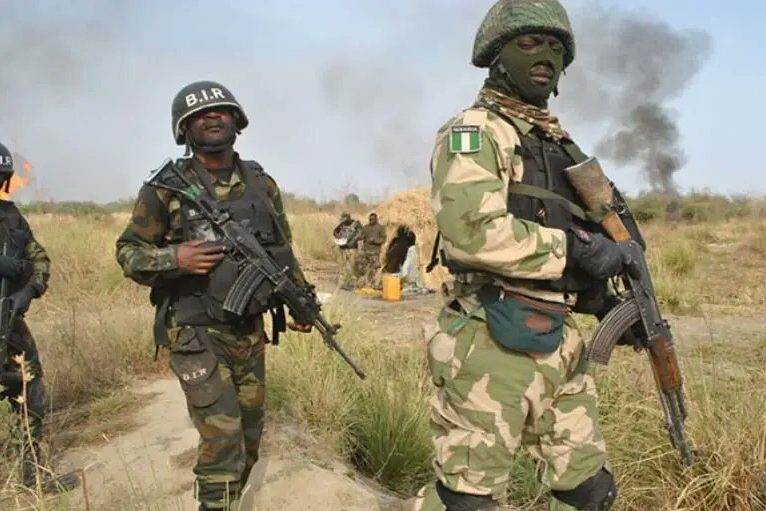
On July 1, 2025, Nigerian troops from Operation Hadin Kai, in collaboration with the Multinational Joint Task Force (MNJTF), engaged and killed 10 insurgents affiliated with Boko Haram and ISWAP along the Rann–Gamboru Ngala axis, near the Cameroon border in Borno State. The Directorate of Defence Media Operations, Major General Markus Kangye, officially confirmed the outcome.
Details of the Engagement
Troops acted upon timely and credible intelligence, leading a coordinated assault into militant hideouts around Manawaji, a border community between Rann and Gamboru Ngala. The ensuing gunfight was fierce; however, superior Nigerian and MNJTF firepower forced militants into retreat, and ten fighters were killed in action.
Arms Recovery
Following the clash, troops seized a substantial cache of weapons, notably anti-aircraft ammunition, likely looted in a previous attack on Cameroonian forces. A statement clarified that the weapons are now under technical analysis as the area undergoes further clearing operations.
Strategic Significance
Major General Kangye emphasized the broader strategy, noting this operation is part of a concerted effort to dominate the southern Lake Chad region and block cross-border insurgent movements. The Nigerian Army pledged to sustain offensive operations until all Boko Haram and ISWAP strongholds are dismantled in the region.
Local Commander’s Statement
The Theatre Commander for Operation Hadin Kai, Major General Abdulsalam Abubakar, spoke to Channels TV from Maiduguri, reporting at 5:30 pm on June 30, 2025, troops in Manawaji engaged terrorists, resulting in 10 neutralizations and the recovery of numerous weapons including anti-aircraft rounds. He also reaffirmed that the theatre would maintain relentless pursuit of militants until full regional stabilization.
5. Fuel Subsidy Scandal Exposed by Ex‑EFCC Boss AbdulRasheed Bawa
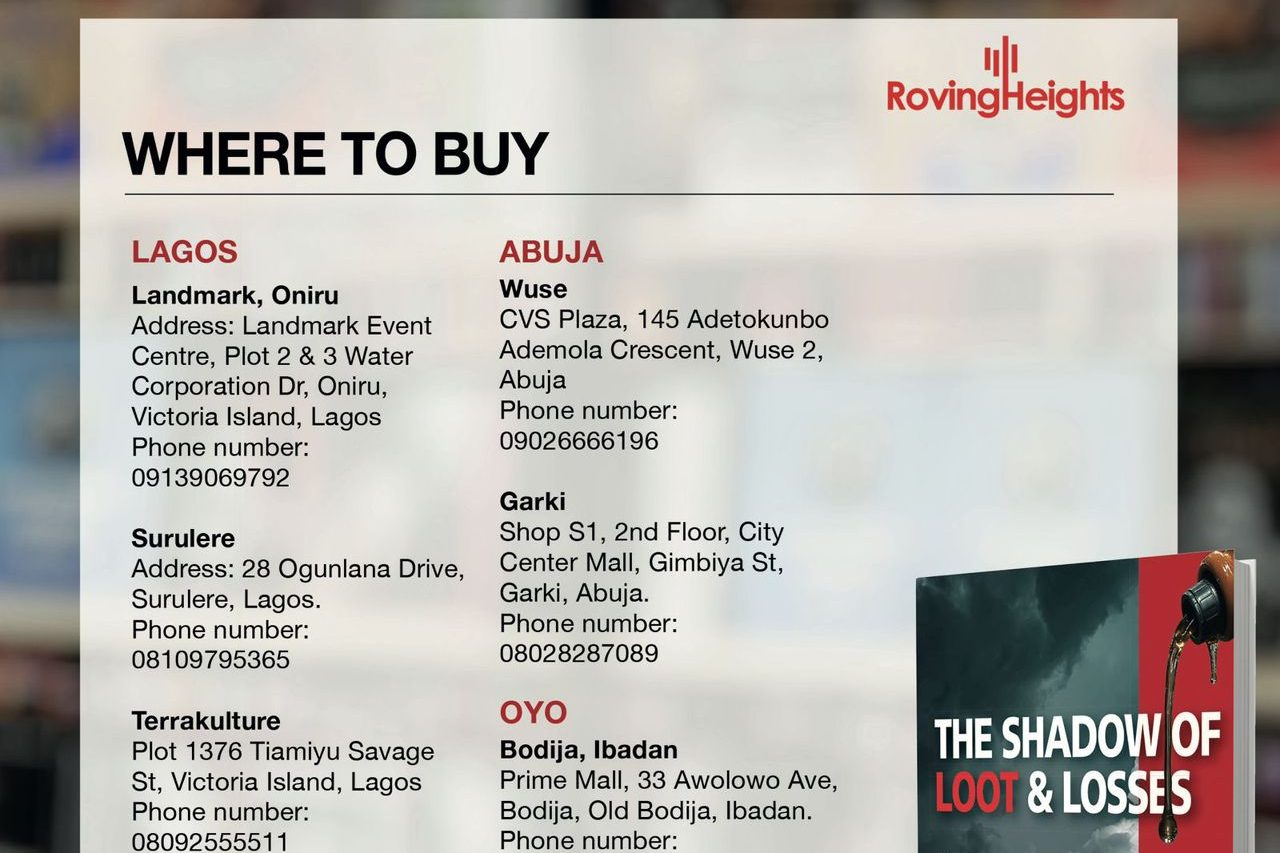
Former EFCC Chairman AbdulRasheed Bawa has publicly denounced Nigeria’s fuel subsidy regime as a “compromised system” and a “monumental scam”, revealing extensive collusion between private companies, government entities, and even law enforcement. Drawing on his investigations with the EFCC Subsidy Special Team (2006–2011), Bawa’s revelations are detailed in his new book, The Shadow of Loot & Losses: Uncovering Nigeria’s Petroleum Subsidy Fraud .
Scale of the Corruption
Subsidy disbursements surged from roughly ₦200 billion in 2006 to an astonishing ₦2.1 trillion by 2011. Scams included ghost imports, over-invoicing, manipulated bills of lading, double claims, and the smuggling or diversion of subsidized fuel. Bawa confirmed, “Everybody was benefiting from the scale and the scam, including law enforcement,” warning that “people can be compromised… it’s a general thing”.
Tactics Used by Bad Actors
Bill of Lading manipulation: Altering shipment dates to exploit pricing fluctuations.
Ghost shipments & inflated volumes: Claiming subsidies for nonexistent or exaggerated fuel loads.
Round-tripping/double claims: The same cargo was often claimed multiple times.
Diversion and smuggling: Fuel intended for domestic distribution was redirected to illicit markets.
Institutional Weakness & Collusion:
Bawa attributes the pervasive fraud to weak regulatory oversight, forged documentation, and collusion across public and private sectors including PPPRA officials and law enforcement.
Impact & Reforms
The volume of fuel marketers dropped from 118 to 49, and total subsidy dispensed shrank from over ₦2 trillion to ₦1 trillion during the probe.
Post-2023, with the removal of the subsidy, Bawa welcomed the change, saying, “It’s a good thing that we had to let it go”. He also emphasized the need for transparency and accountability across public finance, saying his book is “The Shadow of Loot & Losses is not just a chronicle of fraud; it is a call to action , a demand for transparency, accountability, and reform in Nigeria’s public finance management”.
6. PDP Governors Allegedly Forced to Defect to APC
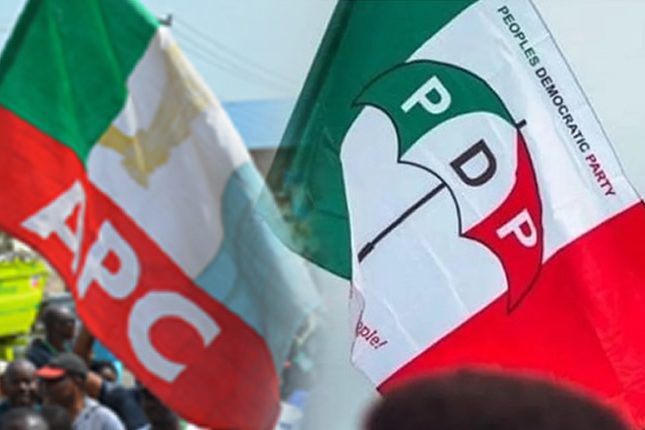
Allegations by Kola Ologbondiyan PDP chieftain and former National Publicity Secretary Kola Ologbondiyan recently alleged on Channels Television’s Sunrise Daily (July 1, 2025) that governors elected on the PDP’s platform are experiencing systematic harassment and humiliation, and are being forced to abandon the party and join the ruling APC, ahead of the 2027 elections.
He stated: “They are being humiliated, and whether they can openly say it or not, they are being forced to abandon their party and join the All Progressives Congress…”
Context & Background
The allegations come on the heels of recent high-profile defections by Delta Governor Sheriff Oborevwori and Akwa‑Ibom Governor Umo Eno, both of whom left the PDP for the APC.
This wave of defections follows President Tinubu’s mediation between former Rivers Governor Sim Fubara and Minister Nyesom Wike, after which Tinubu declared a political “state of emergency” in Rivers in March 2025 and later brokered a reconciliation.
Reactions from the Governors & APC
APC’s Bala Ibrahim dismissed Ologbondiyan’s claims, calling them an insult to the character of the governors and asserting that the defections were voluntary, motivated by Tinubu’s achievements. But Delta Gov. Oborevwori (via his chief press secretary) countered that the move was based on his constituents’ desire for development, not coercion.
Further PDP Response
The PDP accused the federal government of using threats, intimidation, and patronage to induce these defections. A statement from a closed meeting involving Atiku Abubakar, David Mark, Uche Secondus, and others alleged: “The heatwave unleashed by the APC Federal Government through threats, blackmail and patronage has forced elected officers in government to abandon the PDP.”
Scale of the Defections
In addition to governors, the defection ripple extended to state legislatures: for instance, 24 of 26 lawmakers in the Akwa‑Ibom Assembly also moved from PDP to APC in late June 2025.
Suscribe for more updates!
 The Naija Lowdown Writer