Tinubu and His First Lady Departs for Awujale Burial

On July 20, 2025, President Bola Ahmed Tinubu departed from Abuja alongside First Lady Oluremi Tinubu to Ijebu‑Ode, Ogun State, to attend the eighth‑day prayer ceremony in honour of the late Awujale of Ijebuland, Oba Sikiru Kayode Adetona. The event took place at Dipo Dina International Stadium, where Tinubu joined Governor Dapo Abiodun, traditional leaders, and other dignitaries to pay tribute.
Oba Adetona passed away on July 13, 2025, at the age of 91, after a reign lasting over 65 years, making him one of Nigeria’s longest‑serving traditional rulers. He was buried the following day at his private residence in Igbeba, Ijebu‑Ode, following Islamic funeral rites. Tinubu, in his tribute, described the late monarch as “a towering natural ruler who served his people with dignity, panache, class, and an unmistakable sense of duty,” stating that his passing “left an enormous void within the traditional institutions in Yorubaland and Nigeria”.
Tinubu Renames UNIMAID After Buhari
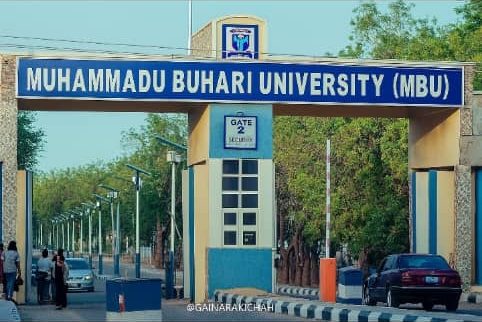
On July 17, 2025, during a special Federal Executive Council (FEC) session held at the Presidential Villa in Abuja to honor the late former President Muhammadu Buhari, President Bola Ahmed Tinubu officially declared that the University of Maiduguri (UNIMAID) would be renamed “Muhammadu Buhari University, Maiduguri”. This renaming was met with applause from cabinet members, including Buhari’s son, Yusuf Buhari, and was described as a fitting tribute to a leader whose “personal integrity, austere lifestyle, and deep sense of duty” left a lasting mark on Nigeria.
The move sparked significant backlash from academia, notably the local chapter of the Academic Staff Union of Universities (ASUU) at UNIMAID. Led by Abubakar Mshelia Saidu, ASUU called the renaming a “brazen affront” to the institution’s identity, urging correction to protect its 50-year legacy. Meanwhile, President Tinubu and supporters defended the decision, portraying it as a way to immortalize Buhari’s legacy , a struggle between honoring a fallen leader and preserving academic autonomy now at the centre of public debate.
Nigerian Soldiers Reject ₦13.7 Million Bribe from Terrorists
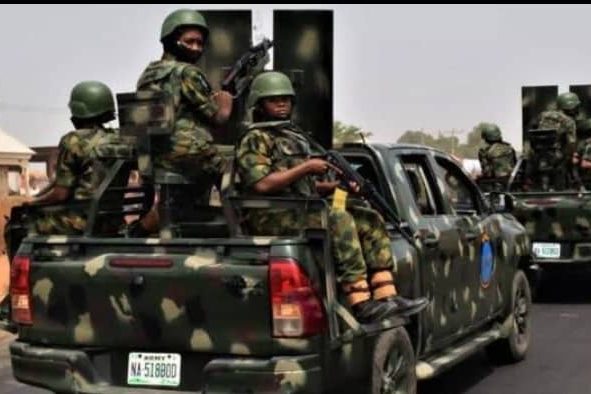
On July 9, 2025, troops operating under Operation Safe Haven intercepted a bullet-riddled vehicle along Jos–Sanga Road, Plateau State, after responding to a distress call about terrorist activity. Inside were two suspects who attempted to bribe the soldiers with ₦13,742,000 to secure their freedom. The soldiers stood firm, refused the bribe, and proceeded to arrest the suspects. In the operation, they recovered weapons, ammunition, the vehicle, and the cash, which are currently held in military custody as investigations continue.
Major General Markus Kangye, the Defence Media Operations Director, confirmed during a briefing in Abuja that this event occurred within a broader offensive in Plateau and surrounding areas (including Bassa, Barkin Ladi, South Wase, Riyom, Jos East) and parts of Kaduna and Nasarawa States. The troops neutralized extremists, arrested 12 suspects, rescued three kidnapped victims, and seized various weapons, ammunition, motorcycles, illicit drugs, and vehicles. Kangye praised the troops’ “professionalism and integrity,” emphasizing the military’s refusal to negotiate with terrorists and continuing dedication to restoring security in the region.
Deepening Food Crisis in Nigeria

Nigeria is amid a worsening food crisis, with over 30 million people facing acute hunger during the June–August lean season, according to FAO and WFP forecasts. Once celebrated for its abundant arable land and youthful farming population, the nation is now challenged by a “perfect storm” of violent conflict in the Middle Belt and northeast, climate change, inflation, and economic mismanagement. Persistent banditry, Boko Haram attacks, and rural insecurity continue to disrupt agricultural activities, displacing residents, destroying crops, and reducing yields in key regions like Borno, Benue, and Sokoto. Meanwhile, erratic rainfall, prolonged dry seasons, and flood damage are further crippling food production, forcing farmers in the north to abandon fields as rivers dry up.
Agricultural analysts, including those at BusinessDay, underscore all‐year, all‐season farming, emphasizing irrigation and mechanization to break dependence on rain-fed systems. Experts like Prof. Ibrahim Abubakar of Ahmadu Bello University and Dr. Jude Obi advocate for mechanized and climate-smart agriculture, weather forecasting tools, and modern farming techniques to protect yields from droughts, floods, and pests. In addition, the private sector and NGOs are working to improve post-harvest infrastructure, such as solar-powered cold storage by firms like Ecotutu, to combat the N3.5 trillion annual losses from spoilage. PILOT programmes like Propcom+ are promoting resilient, market-driven smallholder farming, while policymakers are urged to expand access to affordable credit, quality seed, extension services, and rural financing.
ADC Demands Probe of Nigeria’s Refineries

ADC said to FG: You Cannot Spend Billions to Repair Refineries, Then Quietly Sell Them Without a Full Audit “What Exactly Are You Selling, Scrap or Sovereign Assets?” On July 17, 2025, the African Democratic Congress (ADC) publicly demanded an immediate, full-scale forensic audit of all three state-owned refineries, Port Harcourt, Warri, and Kaduna, before any privatization attempts by the Federal Government. The ADC highlighted that successive administrations have collectively funneled nearly US $18 billion into their rehabilitation, with an additional US $2.8 billion spent under President Tinubu’s current administration, yet the refineries remain “moribund” and operationally inactive . Mallam Bolaji Abdullahi, ADC’s National Publicity Secretary, warned that the failure to audit and transparently account for funds could lead to a “massive economic betrayal” and facilitate sales of crippled assets at undervalued prices to cronies .
The ADC accused government officials of concealing waste through repeated “turnaround maintenance” that never restored refinery capacity, calling the entire process a “black hole for public funds” and possibly a long-running scam . They also referenced remarks by Aliko Dangote, who questioned the viability of government-owned refineries, noting that his private refinery remains the only reliably functioning facility in Nigeria . Accordingly, the ADC called for a comprehensive audit, covering financial, structural, and technical aspects, covering expenditures from 2010 to date, and for the findings to be publicly presented during legislative hearings involving civil society and anti-corruption bodies. Without such measures in place, the ADC asserted, any refinery sale would be illegitimate and potentially criminal .
Abia to Recruit 4,000 Additional Teachers
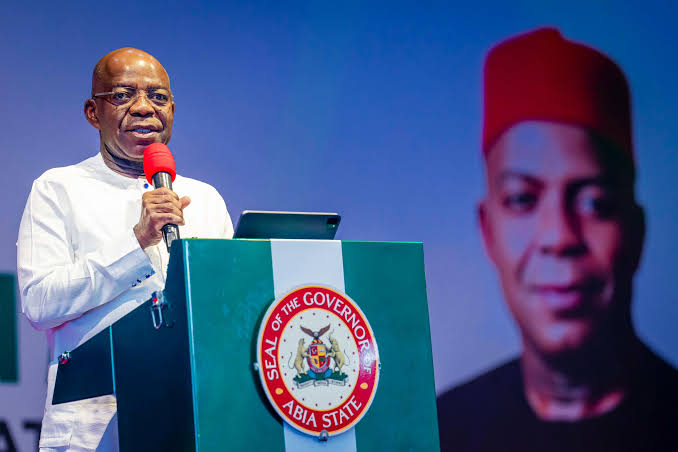
On June 20, 2025, Governor Alex Otti announced during his monthly media chat in Umuahia that Abia State would recruit 4,000 additional teachers for public primary and secondary schools. This initiative comes after an initial recruitment of 5,394 teachers, whose orientation is currently underway, and brings the total number of newly hired teachers to 9,394, aiming to bolster staffing amid a surge in student enrollment following the introduction of free, compulsory basic education in January 2025.
Governor Otti emphasized that the free education policy, funded by allocating about 20% of the state’s budget to education, led to higher pupil intake, requiring a stronger workforce. He committed to opening the recruitment portal immediately after orientation of the first batch and assured that teachers would be well-compensated and that 20 schools would be upgraded to “smart schools”. The plan also includes infrastructural improvements and enhanced teacher packages to attract and retain top talent.
Nigerian Crude Prices Near Budget Benchmark

Global crude oil prices have climbed recently due to drone attacks on oil facilities in Iraqi Kurdistan that shut down approximately 140,000–150,000 barrels per day of production. This supply disruption, coupled with strong summer demand, lifted Brent crude to around US $69.81 per barrel, with WTI at $67.81 by July 18, 2025. In parallel, data from Nigeria’s Upstream Petroleum Regulatory Commission (NUPRC) shows the country’s crude production averaged 1.505 million bpd in June, slightly above its OPEC quota of 1.5 million bpd, and total crude + condensate output near 1.7 million bpd. With Brent hovering close to the country’s US $75 per barrel budget benchmark, these developments are significant for government revenue and fiscal planning.
The rally has alleviated some fiscal pressure, giving optimism for improved foreign exchange inflows and enhanced revenue, though analysts caution that an oil price around $70 remains volatile and below benchmark. The IMF has advised Nigeria to adjust its 2025 budget downward due to persistent prices in the $66–68 range, well under the assumed $75 benchmark, urging built-in buffers, tighter spending discipline, and expanded social safety nets. Additionally, the volatile global backdrop, rising Middle East tensions and U.S. trade uncertainties, may both help and hinder, as elevated prices ease short-term revenue stress but keep economic planning precarious.
EFCC Cracks Down on Naira Abuse
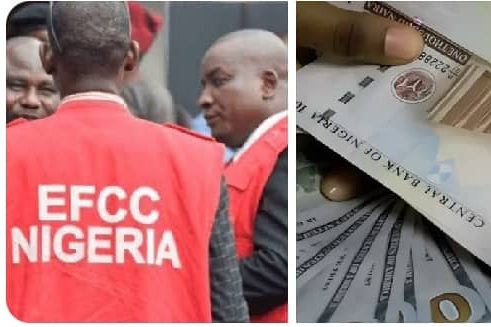
On July 20, 2025, the Economic and Financial Crimes Commission (EFCC) initiated a fresh nationwide campaign to curb abuse of the naira, targeting practices such as spraying, mutilation, stamping, stamping, and dollarisation. EFCC Chairman Ola Olukoyede, speaking at a sensitisation forum in Lagos, underscored that currency abuse is neither tradition nor entertainment, but constitutes economic sabotage: “There’s nothing cultural about spraying or mutilating the naira … The naira is our sovereignty, and we must defend it”. He announced the creation of a Special Task Force in collaboration with the CBN, focusing on detection, prosecution, and alteration of public attitudes, with support from a newly launched EFCC radio station (97.3 FM), NOA, filmmakers, and community influencers.
Under Section 21(1–5) of the 2007 Central Bank Act, currency abuse is punishable by up to six months imprisonment and/or a ₦50,000 fine. Enforcement surged notably in 2024–25, yielding over 200 pending trials, 24 convictions, and high-profile cases including Bobrisky (sentenced to six months), a Nollywood actress, and Cubana Chief Priest. More recently, the EFCC arrested a Kaduna-based social media content creator and socialite E‑Money in Lagos for violations. Critics argue that while the law is aimed at upholding national pride amid currency devaluation, it may disproportionately impact cultural expression and divert attention from entrenched corruption.
Atiku’s Political Moves Stir Controversy
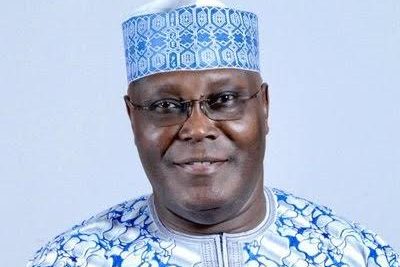
In mid-July 2025, former Vice President Atiku Abubakar officially resigned from the People’s Democratic Party (PDP) and joined the African Democratic Congress (ADC), signaling his alignment with the newly minted opposition coalition aimed at challenging President Bola Tinubu in the 2027 elections. The coalition, hosted under ADC, includes notable figures such as Peter Obi, Nasir El‑Rufai, Rotimi Amaechi, David Mark, and Rauf Aregbesola, among others. ADC leaders framed the move as necessary to “prevent Nigeria from becoming a one‑party state,” citing the urgency of creating a united front against APC and Tinubu.
Despite the initial optimism, analysts flagged internal tensions around candidate selection and party unity. ADC hosts several high-profile presidential hopefuls, raising concerns about leadership conflicts and ideological coherence. Critics argue that the coalition risks becoming a collection of “opportunists” lacking grassroots momentum, while political insiders caution that resolving rival ambitions will define its viability. The APC, however, dismissed the coalition as a “coalition of hoaxers”, questioning its capability and credibility. Other voices emphasize the coalition’s potential to offer an alternative amid soaring inflation, escalating insecurity, and declining democratic space under Tinubu’s government.
Inflation Projected to Drop to 17% by November
As of June 2025, Nigeria’s headline inflation has been steadily declining, with the National Bureau of Statistics reporting a rate of 22.22%, down from 22.97% in May, marking three consecutive months of decline. This deceleration is driven by improved base effects, greater stability in the naira, and moderating food and energy prices.
Analysts from Stanbic IBTC and BusinessDay forecast that headline inflation could fall to between 17% and 17.9% by November 2025, citing favourable base-year comparisons and stabilizing macroeconomic conditions. They caution, however, that seasonal spikes, especially due to flooding and lean harvests in July and August, could temporarily elevate monthly figures. Core inflation is expected to remain relatively stable, while the Central Bank of Nigeria is likely to maintain tight monetary policy until clear disinflation trends appear, potentially delaying rate cuts to September onward.
Implications for Nigeria: If inflation does fall to around 17% by November, it will still remain above the 2025 budget assumption of 15%, implying the government should maintain fiscal prudence, incorporate buffers, and possibly open room for monetary easing in late 2025.
 The Naija Lowdown Writer