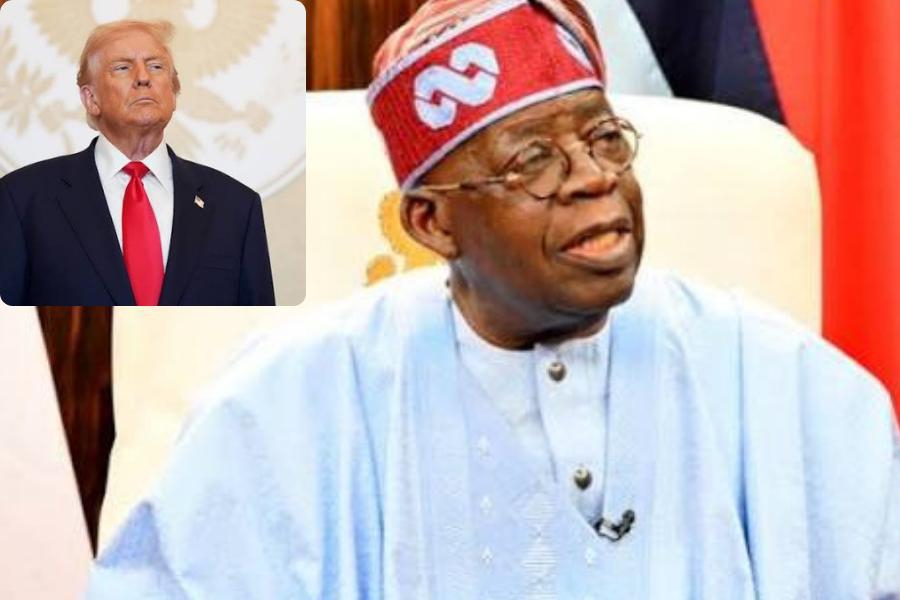
A few days ago, Trump’s latest threats to hit Nigeria militarily over “the killing of Christians” landed like a thunderclap. The rhetoric is blunt, the timeline compressed, and the implications enormous. According to multiple outlets, he has said U.S. troops or airstrikes are “on the cards,” tying possible action to Washington’s recent decision to again list Nigeria as a “Country of Particular Concern” for religious freedom. In its wake, most Nigerian officials and some citizens have pushed back, warning against sweeping claims that inflame tensions and insisting on sovereignty as cooperation continues against extremists.
However, the temperature rose quickly, which is why Nigerians are suddenly asking a once unthinkable question. Is this a straight line to a wider war, or only another loud threat from a politician who understands the media’s oxygen better than most. Either way, the stakes are real.
Are there justifiable claims about the killing of “only” Christians in Nigeria?
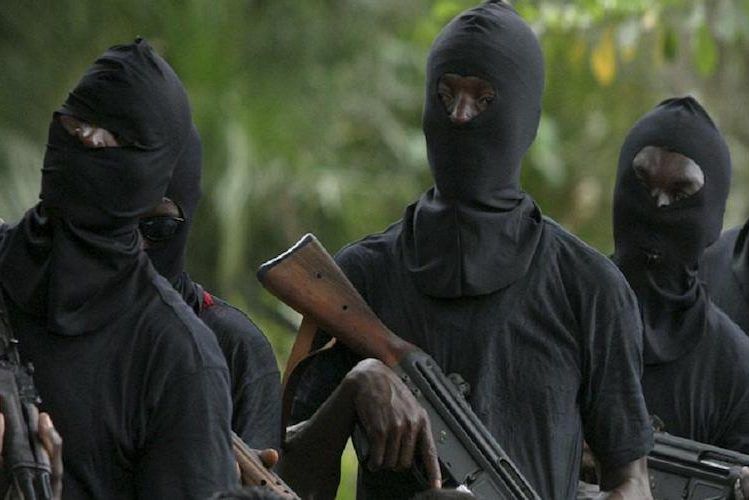
Let us start with the claim that Christians are being systematically slaughtered while the state looks away. Nigeria’s security crisis is not a single-story tragedy. Extremist groups and bandits have killed Muslims and Christians alike. Still, that does not erase the real suffering of Christian communities in the Middle Belt or the North East, nor the church burnings and village raids that make headlines. It only reminds us that the map of grief is bigger than a talking point. Even sympathetic Western coverage notes this complexity and warns against easy narratives that convert a national security emergency into a religious civil war. If a White House uses that simplified frame to justify force, it will export an American argument into a country where identity is already tinder dry.
Why the sudden urgency?
Part of the answer is timing and politics. Public threats of force have long been one of Trump’s favorite megaphones. He understands that loud warnings shift agendas and corner counterparts. There is another layer. The United States has strategic interests in West Africa that go beyond humanitarian concern. Counterterrorism partnerships, migration routes, global great-power competition, and yes, energy security, all color Washington’s thinking. Here is where Nigerians hear more than altruism. They hear subtext about oil.
Natural resources come to limelight

The oil angle is not fantasy. U.S. inventories in the Strategic Petroleum Reserve fell to multi-decade lows after large emergency releases in recent years. The reserve has begun to inch up, and official pages stress the remaining cushion in days of import cover, but the political conversation at home continues to oscillate between “replenish” and “secure supply.” Nigerians hear American officials on global stages saying the reserve must be refilled. They see charts showing stocks well below historic peaks. They connect dots, fairly or not, between alarms about Nigerian instability and the pressure to steady global barrels. Even if the SPR is not “empty,” the perception of scarcity shapes suspicion. That suspicion matters in a region that has witnessed a century of foreign interest in its resources.
Dangote’s latest achievement in the oil market

The Dangote Petroleum Refinery in Lagos has reached an historic milestone by refining more fuel than Nigeria currently consumes. Major news organizations report that the refinery is already loading tens of millions of litres of petrol and diesel per day, finally positioning Nigeria to reduce dependence on imported fuel, a dependence that drained billions in foreign exchange and weakened the naira for years. This achievement also supports national energy security since Nigeria’s state-owned refineries have long struggled to operate efficiently. Economists argue that if sustained, this shift could stabilize local fuel pricing, ease pressure on government subsidy structures, and potentially strengthen the country’s economic outlook.
The refinery’s ambitions go beyond domestic supply. With a 650,000-barrel-per-day capacity and ongoing plans to expand to 1.4 million barrels poised to become the world’s largest single-train refinery. Dangote is pushing to turn Nigeria from a fuel-importing economy into a regional export powerhouse. This growth momentum includes the acquisition of thousands of gas-powered distribution trucks and strategic infrastructure aimed at entering West African and global export markets. Analysts view this not only as a boost in industrial diversification but also a signal that the private sector is now leading Nigeria’s downstream transformation in ways government refineries have failed to achieve for decades.
To protect this national economic advantage, Dangote has reportedly secured key land positions near offshore infrastructure and engaged in policy pushback against multinational refiners. Sources within the oil sector describe discussions targeting a 15 percent maritime draft or tariff-style control designed to prevent foreign giants like Shell and others from undercutting domestic refining by cheaply “zooming in” to extract crude or dominate the fuel market without contributing significantly to local industry growth. Supporters frame these measures as necessary for national survival, while critics warn of a creeping monopoly that could harm competition if transparency and fair regulation are not prioritized. Ultimately, Dangote’s refinery has disrupted the old order, and what happens next may determine whether Nigeria’s long-awaited energy independence becomes permanent or merely symbolic
Examples of other countries claimed to have been helped by the US Government
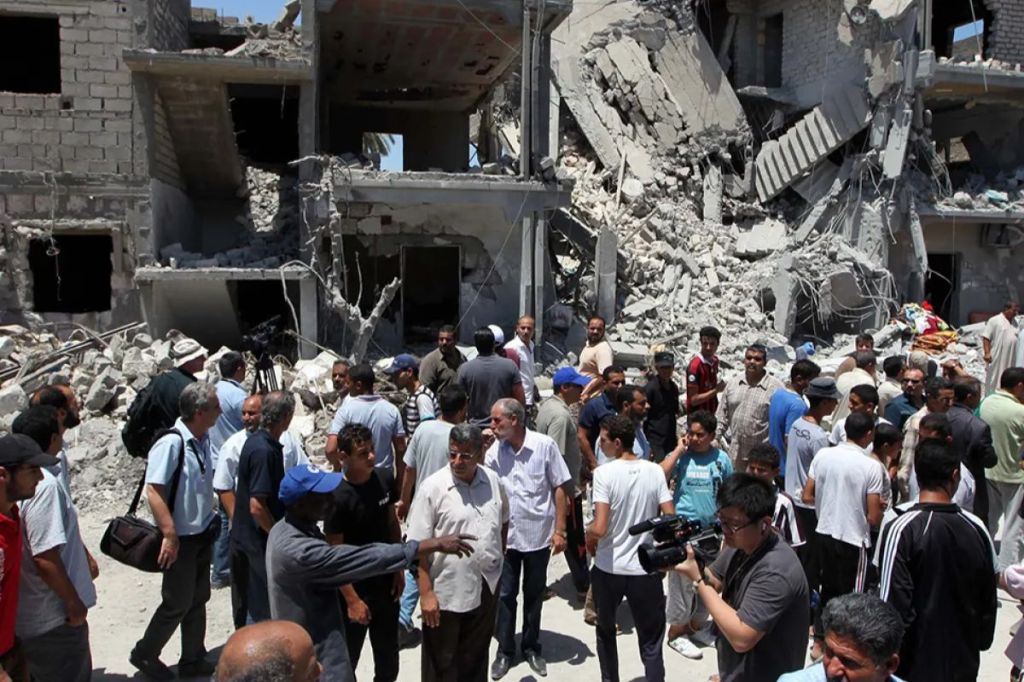
We also have precedent. When outside powers promise to help, they often leave chaos in their wake. Libya is the textbook everyone cites. NATO justified its 2011 intervention as civilian protection. The bombing ended the Gaddafi regime, but it did not build a state. Since then Libya has fractured, militias have multiplied, elections stall, and smuggling networks feed off oil and human suffering. Even Western parliaments and think tanks now admit the aftermath discredited the neat promises of humanitarian war. If the lesson is that toppling villains is easier than stitching societies, then any talk of “limited strikes” in Nigeria should be treated with more skepticism than swagger.
Haiti offers a different lesson about the gap between intent and impact. Over a century of occupations and interventions reshaped Haitian politics and even its constitution. After the 2010 earthquake, the world poured in money and promises. Investigations later found that signature projects and marquee charities delivered far less than advertised while ordinary Haitians remained stuck in misery. This is not to argue that every outside effort is cynically self-serving. It is to remind us that complicated societies are not fixed by press releases, and that grand foreign pledges often mask other priorities, including domestic politics in the helper’s capital.
Will Nigeria be part of these destroyed countries?
Now pull the camera back to the ground here at home. Nigeria’s insecurity crisis is the daily reality against which any threat of U.S. force would play out. The numbers are grim. Independent trackers and media analyses show thousands killed and abducted this year across bandit raids, farmer–herder clashes, jihadist ambushes, and communal reprisals. Benue’s Yelewata stands as a stark example. Gunmen raided the town in June, with reports of mass casualties and displacement that turned schools and fields into graveyards. Relief monitors have tallied staggering death counts across the North Central and beyond. This is the context Trump points to when he reduces the pattern to the killing of Christians. This is also why many Nigerians refuse an imported religious frame, because the violence has emptied Muslim villages too and has increasingly targeted markets, highways, and IDP camps where identity is irrelevant to the killers’ business model.
What would happen if the Nigeria Government accepted Trump’s help?
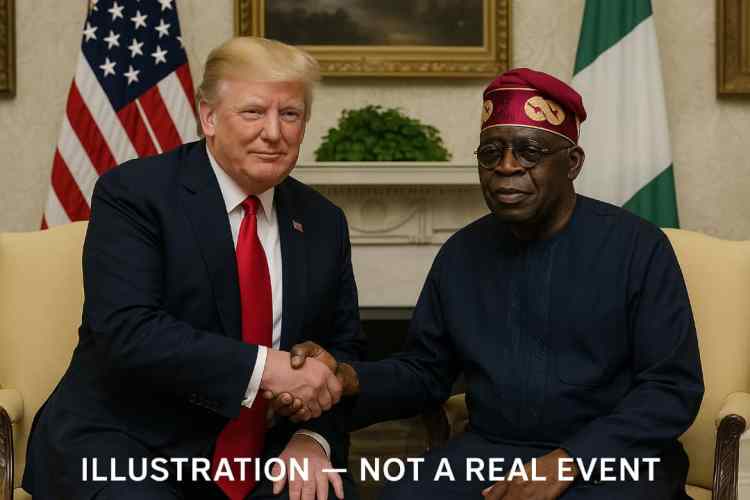
Would U.S. strike help? Let’s consider the likely paths.
First, airstrikes in the North East would require actionable intelligence and reliable local partners, otherwise they risk hitting civilians or simply pushing fighters across borders.
Second, if the target shifts to bandit networks in the North West and North Central, there is no clean front line to bomb. These are fluid criminal economies embedded in rural communities. A foreign military that drops ordnance and leaves would not solve the policing, court, and job problems that feed the bandit market.
Third, even a limited U.S. presence would become a propaganda gift to extremists who thrive on the narrative of crusaders versus Islam. That is not speculation. Groups from ISIS to al-Qaeda built recruitment scripts around the idea of foreign occupation.
Nigeria’s diversity has resisted that binary for decades, sometimes imperfectly, but it has held. Therefore, we should not help our enemies simplify us.
There is also the domestic fracture to weigh. Nigeria is already politically and regionally divided. A U.S. strike announced as a defense of Christians would supercharge old suspicions between neighbors who share wells but not worldviews. Christian communities that welcome outside protection would be accused of inviting foreign firepower.
Moreover, Muslim communities that feel targeted by rhetoric would close ranks and view their Christian neighbors through a security lens. The middle ground, where most Nigerians live and hustle, would shrink. That social shrinkage is exactly what bandits and extremists exploit.
What does the US Government stand to gain?
What would be gained in Washington?
1. A president framed as defending persecuted Christians gets a rallying cry with parts of his base.
2. A commander in chief who promises strength abroad can quiet critics who say America is retreating.
3. If oil markets settle, the White House can claim a side benefit. This is the calculus many Nigerians suspect, not because every American decision is a conspiracy, but because history has taught Africans to read past the headline.
Other Factors to Consider
And history is loud on one more point. Western powers have often draped material ambitions in moral cloth. Religion has been used for centuries as a mask for expansion, whether in the language of “civilizing missions,” the doctrine of discovery, or the pairing of “Christianity and commerce” that justified empire. Missionaries were sometimes sincere servants who built schools and clinics. They were also the vanguard of administration and trade, softening ground for the flag. That history does not prove that every modern humanitarian claim is a lie. It does prove that Africans are not naïve to wonder what lies beneath the sermon when soldiers follow.
So where do we land?
If Trump’s threats are a bluff, the Nigeria Government should not answer them with a public chest beating that turns a media moment into a diplomatic trap. Quiet channels with Washington should separate real cooperation from performative soundbites. If the threats harden into planning orders, Nigeria must work the alliances it already has, leverage the African Union, and demand that any external support be under clear rules that respect sovereignty and avoid sectarian framing.
Above all, we must fix our own house. That means accelerating security sector reforms, investing in rural policing and justice, funding early-warning networks, and moving development money to hotspots before they explode. These are not glamorous steps, but they are the shield that no foreign jet can provide.
Important Message
This is not a call to deny the pain of Christian communities. It is a call to resist a simple story that would make their pain the pretext for a war that Nigeria would carry long after foreign cameras move on. It is also a challenge to the Nigeria Government. When a president in Washington can credibly weaponize our failures against us, the answer is not only diplomatic outrage. The answer is to make our citizens safer, so that no one can claim to be rescuing us from ourselves.
World War III is not inevitable. What is inevitable is that reckless talk from powerful capitals will continue as long as Nigeria remains vulnerable. The best way to lower the volume of foreign threats is to raise the competence of our own response. That starts with telling the full truth about our crisis, refusing imported labels that divide us, and insisting that any partnership be built on sovereignty, not salvation.
References
Associated Press (AP News). Reporting on the refinery’s development and recognition as the largest single-train facility of its kind.
Amnesty International. Nigeria: Annual Human Rights Reporting, documenting attacks, displacement, and community violence trends across affected regions.
BBC News. Libya After NATO, coverage and timeline of the post-Gaddafi instability and militia fragmentation.
Brookings Institution. Analysis on U.S. energy security strategy and geopolitical reliance on foreign oil.
Channels Television. Reporting on Benue and North-Central attacks including incidents around Yelewata.
Council on Foreign Relations — Nigeria Security Tracker. Data on killings, abductions, and security incidents across Nigeria.
Human Rights Watch. Reports on communal conflicts, banditry, and extremist violence throughout affected Nigerian states.
International Crisis Group. Security briefings on insurgency, farmer–herder clashes, and bandit networks in Nigeria.
NPR; The Guardian. Investigative reporting into Haiti’s political disruption and long-term consequences of foreign intervention.
Oxford Research Encyclopedia of African History. Documentation of European missionary influence in Africa and its role in colonial expansion.
ReliefWeb; United Nations OCHA. Displacement statistics and conflict mapping in Nigeria’s North East, North West, and North Central.
Reuters. Political coverage of U.S.–Africa relations including Trump’s foreign intervention rhetoric.
Sahara Reporters. Political reporting on proposed diplomatic engagements between the United States and Nigerian leadership.
The National News (UAE). Reporting on U.S. Strategic Petroleum Reserve levels and remarks delivered at ADIPEC.
The New York Times. Investigative coverage on Haiti’s external governance pressures and aid outcomes.
U.S. Department of State. Designation of Countries of Particular Concern, with reference to Nigeria’s placement under the International Religious Freedom Act.
U.S. Energy Information Administration (EIA). Strategic Petroleum Reserve statistical updates and history.
UNESCO. Historical materials detailing missionary activity and its link to European political and economic interests in Africa.
Dangote Refinery & Petrochemicals; Nigerian Midstream and Downstream Petroleum Authority. Official public statements on refining capacity, domestic supply strategy, and market protections.
Reuters. Business and energy coverage on Dangote Refinery fuel production levels, expansion toward 1.4 million barrels per day, and importation of gas-powered fuel distribution trucks.
The Guardian Nigeria; Channels Television. Domestic reporting on economic effects of the refinery, competition policy concerns, and national energy independence strategy.
Industry Analyst Commentary. Expert opinions on offshore infrastructure acquisition and maritime/tariff measures designed to prevent multinationals from dominating the domestic market without local investment.
 The Naija Lowdown Writer